Project · 2023 - Present
SailPoint Identity Security Cloud
Access Governance
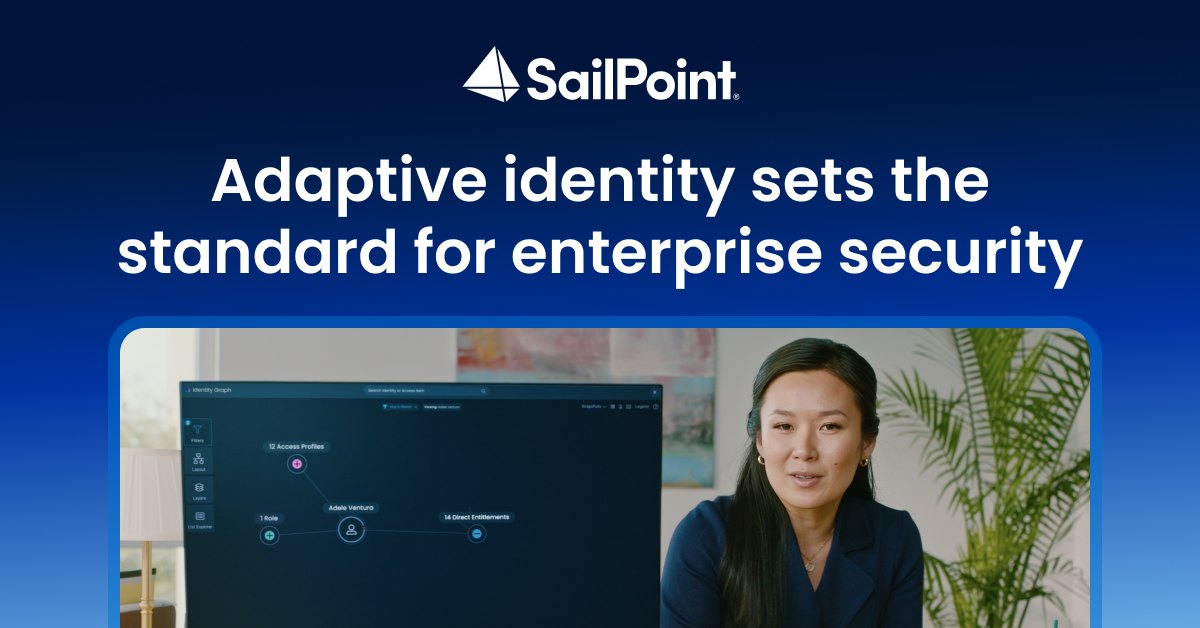
SCIM/REST integrations, RBAC and access review workflows, and ML-assisted role recommendation review that keep enterprise identities, entitlements, and approvals consistent and auditable.
- Task & inputs
- Employee identities, access entitlements, application accounts, provisioning events, and approval records.
- Method
- Implemented SCIM/REST integrations, RBAC and access review workflows, and ML-assisted role recommendation review.
- Deliverables
- Identity synchronization services, approval workflows, entitlement review screens, and administrator-facing insights.
- Technologies
- Java
- Spring Boot
- Go
- Python
- Angular
- SCIM
- PostgreSQL
- Kafka
- scikit-learn
- AWS
- manual account reconciliation across 36,000 identity records
- 23%lessmanual account reconciliation across 36,000 identity records
- duplicate permission updates across 74,000 provisioning events
- 29%fewerduplicate permission updates across 74,000 provisioning events
The product
SailPoint Identity Security Cloud (formerly IdentityNow) is SailPoint’s SaaS identity security product, built on the multi-tenant Atlas platform. It decides and records who has access to what across an enterprise: it provisions accounts from HR events, enforces role-based access and segregation-of-duties policies, and runs access reviews (certifications), with AI-driven role discovery, access recommendations, and outlier detection.
It connects to source systems through connectors such as Workday (joiner/mover/leaver for workers and contingent workers), Active Directory (users and groups across domains and forests), and Salesforce, and it exposes public REST APIs, SDKs, and real-time event triggers.
The problem
Enterprise access changes constantly: people join, move, and leave; applications add entitlements; auditors require periodic reviews. Access governance has to keep identity and entitlement records consistent across HR, directory, and SaaS systems, enforce policy before access is granted, apply changes exactly once even under high event volume, and give administrators clear, explainable recommendations instead of thousands of raw entitlements.
What I built
- Access governance microservices (Java/Spring Boot, REST): backend services that automate employee identity provisioning, role-based access management, and permission reviews across enterprise applications.
- Identity integrations (Go, SCIM, REST): services connecting Workday, Active Directory, and Salesforce with identity correlation, attribute mapping, and incremental synchronization. Result: 23% less manual account reconciliation across 36,000 identity records.
- RBAC & approval workflows (Java, Spring Boot, PostgreSQL): role assignment rules, segregation-of-duties checks, multi-stage approvals, and automated access revocation for onboarding, transfers, and terminations.
- Event-driven provisioning (Kafka, Redis, AWS): asynchronous provisioning jobs, idempotent event handlers, retry policies, and dead-letter queues. Result: 29% fewer duplicate permission updates across 74,000 monitored provisioning events.
- Identity analytics & ML (Python, pandas, scikit-learn, SQL): entitlement-relationship analysis, AI-assisted role recommendations, and unusual-access detection, integrated into governance workflows for administrator review.
- Admin experience (Angular, TypeScript): identity search, access certification dashboards, entitlement filtering, and recommendation review screens to approve or reject access changes.
- Reliability (Docker, Kubernetes, AWS EKS, Terraform, Jenkins, OpenTelemetry, Grafana): automated unit and integration tests, deployment validation, and monitoring to detect provisioning failures and investigate API latency.
Engineering notes
- Why idempotent handlers and dead-letter queues: Kafka delivers at least once, so a retried or replayed provisioning event must not grant or revoke a permission twice; idempotent handlers make re-delivery safe, retries absorb transient failures in target systems, and dead-letter queues isolate poison messages for investigation instead of blocking the stream.
- Why incremental sync with correlation: re-reading every account from Workday, Active Directory, and Salesforce is slow and noisy; syncing only changes and correlating accounts to the right identity by mapped attributes keeps records consistent and leaves far fewer mismatches for humans to reconcile.
- Why policy checks before approval: segregation-of-duties rules are cheapest to enforce before access exists; evaluating RBAC and SoD inside the approval workflow, and revoking automatically on transfer or termination, prevents toxic access combinations instead of discovering them in the next audit.
- Why human-in-the-loop ML: role recommendations and unusual-access findings change who can reach sensitive systems, so they are surfaced in review screens for administrators to accept or reject rather than applied automatically.
Gallery
Public product resources
Sources
Company and product facts on this page come from the public sources below. Details of my own work come from my résumé.